

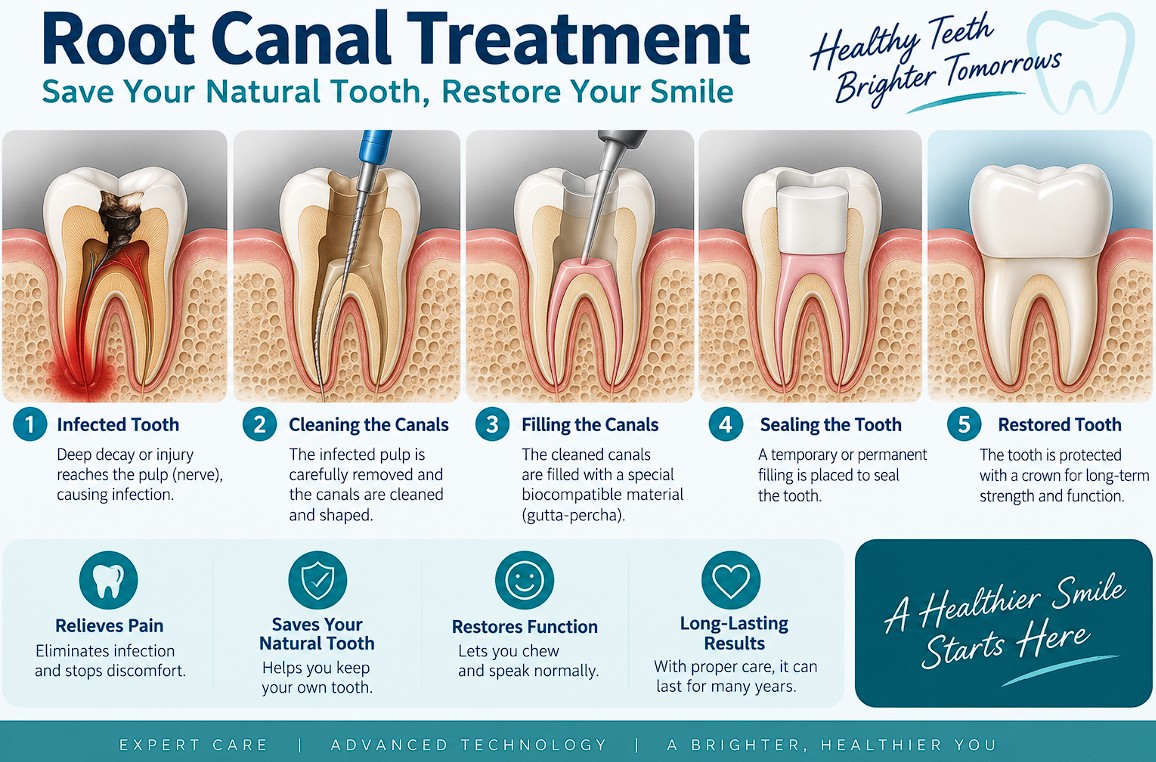
If you have been told you may need root canal treatment in Canning Vale, you are not alone. Root canal treatment is a commonly performed dental procedure that may help save a damaged or infected tooth that might otherwise need to be removed. It is usually carried out under local anaesthetic. The experience varies between patients and depends on the tooth being treated and individual circumstances.
This article explains what root canal treatment involves, why it may be recommended, what to expect during and after the procedure, and how it compares with tooth extraction. If you have tooth pain, prolonged sensitivity, swelling or concerns about a tooth, the team at Dentists @ Canning Vale can assess your oral health and discuss suitable treatment options.
What Is a Root Canal Treatment?
Understanding the Purpose of Root Canal Therapy
Root canal treatment, also called endodontic treatment, is a dental procedure used to remove infected or damaged pulp from inside a tooth, clean and disinfect the root canals, and seal the tooth to help prevent further infection.
The aim of root canal treatment is to preserve a tooth where clinically appropriate. When the inner tissue of a tooth becomes infected or inflamed, treating only the surface of the tooth may not be enough. Root canal therapy addresses the source of infection inside the tooth, allowing the tooth to be restored where suitable.
Preserving natural teeth can be beneficial for chewing function, tooth spacing and jaw support. If a tooth is removed, replacement options such as an implant, bridge or denture may be considered, but these may involve additional appointments, costs and treatment considerations.
What Is Dental Pulp?
Inside every tooth, beneath the hard enamel and dentine layers, is a soft tissue called the dental pulp. The pulp contains nerves, blood vessels and connective tissue. During childhood, the pulp plays an important role in tooth development. Once an adult tooth is fully formed, the tooth can often continue functioning without the pulp because surrounding tissues provide ongoing support.
When the pulp becomes irreversibly inflamed or infected, dental treatment may be required. Bacteria may multiply inside the pulp chamber and root canals, which can lead to an abscess (a pocket of pus caused by infection, which may form around the root of a tooth or in surrounding tissues), chronic inflammation, bone damage around the root, or the need for tooth removal.
Why Might You Need Root Canal Treatment?
Common Causes of Pulp Damage
Pulp damage can result from several dental concerns. These may include:
- Deep tooth decay – when decay progresses through enamel and dentine until it reaches the pulp.
- Cracked or fractured teeth – a crack can allow bacteria to enter the tooth, even when decay is not obvious.
- Repeated dental procedures – teeth that have undergone multiple treatments can become more vulnerable to pulp inflammation.
- Dental trauma or injury – a knock to the mouth from sport, a fall or an accident can damage the pulp internally.
- Long-standing tooth wear or grinding – in some cases, heavy wear or cracks associated with grinding may affect the tooth’s inner tissues.
Better Health Victoria lists deep decay, trauma, long-standing cracks, tooth grinding and advanced gum disease among causes that may contribute to pulp disease or damage.
Signs You May Need Root Canal Treatment
Not every case of pulp damage causes immediate or obvious symptoms. However, signs that may indicate the need for a dental assessment include:
- Persistent or severe toothache
- Prolonged sensitivity to hot or cold temperatures
- Pain when biting or chewing
- Swollen, tender or darkened gums near the affected tooth
- Tooth discolouration
- A pimple-like bump on the gum
- Facial swelling in more serious cases
These symptoms do not always mean root canal treatment is required. A clinical examination, dental history and diagnostic imaging where clinically indicated may be used to determine the cause of the problem and the most appropriate treatment option.
Can a Tooth Infection Heal on Its Own?
An infection involving the dental pulp generally requires dental treatment and should be assessed by a dentist. Healthdirect states that antibiotics alone do not cure root canal infections because the root canal system needs to be cleaned, disinfected and sealed.
Without treatment, bacteria can spread within the tooth and surrounding tissues. This may lead to an abscess, chronic inflammation, bone damage around the root, or the need for tooth removal.
How Does Root Canal Treatment Work?
Root canal treatment may require more than one appointment, depending on the tooth being treated, the number of canals, the severity of infection and the restoration needed afterwards. Healthdirect notes that root canal treatment usually requires a few dental appointments.
Step 1: Examination and Diagnosis
Before treatment begins, your dentist will assess the affected tooth and surrounding area. This may include:
- Checking for swelling, tenderness, decay or cracks
- Taking dental X-rays to assess the tooth roots and surrounding bone
- Testing the tooth to help confirm the source of symptoms
- Discussing treatment options, risks, alternatives and costs
X-rays can help your dentist understand the shape, length and number of root canals, as well as the extent of infection or inflammation.
Step 2: Numbing the Area
Root canal treatment is usually carried out under local anaesthetic. The area around the affected tooth is numbed before treatment begins. Your dentist will check that the area is adequately anaesthetised before proceeding.
A rubber dam (a small sheet placed around the tooth to keep the treatment area clean and dry) may be placed around the tooth to keep it clean, dry and separated from saliva during the procedure.
Step 3: Removing the Infected or Inflamed Pulp
Once the area is numb, your dentist makes a small opening in the tooth to access the pulp chamber. The infected or inflamed pulp is removed using fine dental instruments, and the root canals are identified and cleaned.
The number of root canals varies depending on the tooth. Front teeth usually have fewer canals, while molars often have multiple canals that require careful cleaning and shaping.
Step 4: Shaping and Disinfecting the Canals
After the pulp is removed, the root canals are shaped with small instruments to allow thorough cleaning. The canals are irrigated with disinfecting solutions to reduce bacteria and help prepare the space for sealing.
This stage is important because root canal treatment aims to clean, shape, disinfect and seal the root canal system.
Step 5: Filling and Sealing the Tooth
Once the canals are clean and dry, they are filled with a biocompatible material. One commonly used material is gutta-percha, a rubber-like material used to fill and seal cleaned root canals. The aim is to seal the canals and reduce the risk of bacteria re-entering.
A temporary or permanent filling is then placed in the access opening, depending on the stage of treatment and whether another appointment is required.
Step 6: Restoring the Tooth
After root canal treatment, the tooth usually needs a final restoration. This may be a filling or crown, depending on the amount of remaining tooth structure, the tooth’s location and the forces it needs to withstand. Healthdirect states that after treatment, the tooth is restored with a filling or crown to protect and restore function.
Back teeth may require a crown or other suitable restoration depending on the remaining tooth structure and the forces placed on the tooth. Your dentist will advise which restoration is most appropriate for your situation.
Does Root Canal Treatment Hurt?
Understanding Modern Root Canal Procedures
Root canal treatment has a reputation for being uncomfortable, but this reputation is often linked to older experiences or the pain caused by the infection itself. Root canal treatment is usually performed with local anaesthetic. Individual experiences vary depending on factors such as the condition of the tooth and the complexity of treatment.
The American Association of Endodontists notes that modern anaesthetics and techniques have changed the experience of root canal treatment, and that much of the discomfort patients associate with root canals is caused by the damaged or infected tooth rather than the treatment itself.
If a tooth is severely inflamed or infected, it may sometimes be more difficult to numb initially. Your dentist will assess your comfort throughout the appointment and may adjust the approach if required.
Managing Anxiety About Treatment
It is normal to feel apprehensive about dental procedures. If you are anxious about root canal treatment, let the team know when booking your appointment.
Strategies that may help include:
- Asking your dentist to explain each step before treatment begins
- Agreeing on a hand signal so you can pause if needed
- Bringing headphones to listen to music or a podcast
- Asking whether sedation options may be available or suitable
- Booking a consultation first to discuss your concerns
The team at Dentists @ Canning Vale can discuss options that may help you manage anxiety during your appointment.
What to Expect During a Root Canal Appointment
Before the Procedure
At your initial consultation, your dentist may:
- Review your dental and medical history
- Examine the tooth and surrounding gum
- Take X-rays where required
- Confirm the likely diagnosis
- Discuss treatment options and alternatives
- Explain expected costs and appointment stages
You usually do not need to do anything special before a root canal appointment unless your dentist gives specific instructions. If antibiotics or other medication have been prescribed, follow your dentist’s instructions carefully.
During Treatment
Appointment length varies depending on the tooth and treatment complexity, and some teeth may require additional visits.
During treatment:
- The area is numbed with local anaesthetic
- A rubber dam may be placed to keep the tooth isolated
- The infected or inflamed pulp is removed
- The canals are cleaned, shaped and disinfected
- The canals are filled and sealed
- A temporary or final restoration is placed
You will be awake and able to communicate with your dentist throughout the appointment.
After Treatment
After root canal treatment, the local anaesthetic may take a few hours to wear off. Avoid chewing on the treated side until normal sensation returns to reduce the risk of accidentally biting your cheek or tongue.
Some mild soreness or tenderness may occur for a few days after treatment. Healthdirect notes that some discomfort may occur after root canal treatment but usually improves quickly.
Your dentist will provide aftercare instructions and arrange follow-up appointments where required.
Root Canal Recovery and Aftercare
Common Symptoms After Treatment
Some patients may experience:
- Mild tenderness around the treated tooth
- Temporary discomfort when biting
- Jaw soreness from keeping the mouth open
- Short-term sensitivity in the surrounding area
These symptoms are generally temporary. If pain worsens, swelling develops, or symptoms persist, contact your dentist for advice.
Caring for Your Tooth After Root Canal Treatment
After treatment, it is important to care for the tooth and surrounding tissues. Your dentist may recommend:
- Continuing to brush twice daily with fluoride toothpaste
- Cleaning between your teeth daily
- Avoiding hard, crunchy or sticky foods on the treated side until the final restoration is placed
- Taking medication only as directed by your dentist or doctor
- Attending follow-up appointments as recommended
A tooth that has had root canal treatment may be more vulnerable to fracture if it is not properly restored. Your dentist will advise whether a crown, filling or other restoration is appropriate.
When to Contact Your Dentist
Contact your dentist promptly if you experience:
- Severe or increasing pain
- Facial, gum or jaw swelling
- Fever or signs of infection
- Discharge or a bad taste near the tooth
- A temporary filling that becomes loose or falls out
- A bite that feels uncomfortable after treatment
- Problems with the final restoration
Benefits of Root Canal Treatment
Helping Preserve Your Natural Tooth
The primary aim of root canal treatment is to help save a natural tooth where suitable. Healthdirect notes that root canal treatment can help save a damaged or infected tooth, and that if a tooth is removed, further treatment may be needed to replace it.
Managing Infection at Its Source
Root canal treatment removes infected or inflamed pulp, cleans the canal spaces and seals the root canal system. This addresses the source of infection inside the tooth rather than only treating symptoms at the surface.
Supporting Comfort and Function
Root canal treatment aims to preserve the tooth and restore function where possible. The final result depends on the tooth’s condition, the restoration used, oral hygiene and ongoing dental maintenance.
Root Canal Treatment vs Tooth Extraction
Considering Root Canal Treatment and Extraction
Where a tooth is suitable for root canal treatment and can be restored, preserving it may help maintain chewing function and avoid the need to consider replacement of the missing tooth. Extraction removes the affected tooth but leaves a gap that may need future treatment.
Healthdirect lists tooth removal as an alternative to root canal treatment for badly damaged or infected teeth, but notes that options should be discussed with a dentist or endodontist.
| Replacement Option | Considerations |
|---|---|
| Dental implant | May provide a fixed tooth replacement option for suitable patients, but involves surgery, healing time, assessment of bone volume and additional cost considerations. |
| Dental bridge | May replace a missing tooth without implant surgery, but usually requires preparation of adjacent teeth. |
| Partial denture | A removable tooth replacement option that may be suitable for some patients. |
Important: Dental procedures, including surgical procedures, have potential risks and limitations. Your dentist will discuss those relevant to your proposed treatment.
When Extraction May Be Necessary
There are situations where a tooth may not be suitable for root canal treatment or long-term restoration. Extraction may be recommended if:
- The tooth is severely fractured
- The remaining tooth structure is insufficient
- Bone support around the tooth is too compromised
- The root canal anatomy is too complex for predictable treatment
- Previous treatment has failed and retreatment is not suitable
- The tooth cannot be restored properly after infection is treated
Your dentist will assess the tooth and explain suitable options before treatment proceeds.
How Successful Is Root Canal Treatment?
Long-Term Outcomes
Root canal treatment has a well-established role in dentistry, but outcomes vary between patients. Better Health Victoria states that success rates for endodontic treatment are generally high, with many people able to expect a functional tooth after treatment.
A systematic review of primary root canal treatment reported success rates that varied depending on the criteria used to assess healing and the length of follow-up. This highlights why treatment outcomes should be discussed with your dentist in the context of your individual tooth and oral health.
Factors That Influence Outcome
Several factors may influence the long-term outcome of root canal treatment, including:
- The severity of infection before treatment
- The complexity of the root canal anatomy
- How well the tooth is sealed and restored
- Whether a crown or suitable final restoration is placed where required
- Oral hygiene habits
- Regular dental reviews
- Teeth grinding or heavy bite forces
- General health and healing factors
Your dentist will explain the expected prognosis and any specific risks based on your case.
Common Myths About Root Canal Treatment
Myth: Root Canal Treatment Is Always Extremely Painful
Experiences vary between patients, and local anaesthetic is generally used during root canal treatment. Discomfort is often caused by the infected tooth before treatment rather than the procedure itself.
Myth: Tooth Extraction Is Always Better
Tooth extraction may be appropriate in some cases, but it is not automatically the better option. Removing a tooth can create a gap that may affect chewing, tooth movement and long-term tooth replacement planning. Your dentist can discuss the risks, benefits and alternatives of both options.
Myth: Root Canal Treatment Causes Illness
The American Association of Endodontists states that there is no valid scientific evidence linking root canal treatment to cancer or disease elsewhere in the body.
Myth: A Root Canal Removes the Tooth Roots
Root canal treatment does not remove the roots of the tooth. The infected or inflamed pulp is removed from inside the canal spaces, while the tooth roots remain in place.
Myth: The Tooth Will Definitely Need to Be Removed Later
A root canal treated tooth may continue to function when appropriately restored and maintained. However, treatment outcomes vary and cannot be guaranteed. Regular reviews are important to monitor the tooth and surrounding tissues.
How to Reduce the Risk of Needing Root Canal Treatment
Maintain Good Oral Hygiene Habits
Maintaining good oral hygiene and managing dental decay early can help reduce the risk of decay progressing deeper into the tooth. Helpful habits include:
- Brushing twice daily with fluoride toothpaste
- Cleaning between teeth daily with floss or interdental brushes
- Limiting frequent sugary foods and drinks
- Drinking water throughout the day
- Attending regular dental check-ups
- Booking professional cleans as recommended
Protect Your Teeth From Damage
To reduce the risk of cracks, fractures and dental trauma, consider:
- Wearing a custom mouthguard during contact or collision sports
- Avoiding chewing ice, pens or hard objects
- Not using your teeth as tools to open packaging
- Having cracked or chipped teeth assessed early
- Discussing a night guard if you grind or clench your teeth
Treat Dental Problems Early
Having dental concerns assessed earlier may help identify and manage problems before they progress. Delaying care may allow decay or infection to progress deeper into the tooth, increasing the likelihood of more complex treatment.
Ready to Address Tooth Pain?
If you are experiencing toothache, prolonged sensitivity, swelling, a pimple-like bump on the gum or discomfort when biting, it is worth arranging a dental assessment.
The team at Dentists @ Canning Vale provides root canal assessments and treatment planning for patients across Canning Vale and surrounding Perth suburbs. Our dentists will assess your tooth, explain the findings and discuss suitable options before treatment begins.
To make an appointment or discuss your concerns, contact Dentists @ Canning Vale through our website at dacv.com.au or call our team directly.
Important Information
This article is intended for general informational purposes only and does not constitute dental or medical advice. Individual results, treatment requirements and recovery experiences vary. Treatment suitability depends on your oral health, dental history, medical history and clinical assessment. All clinical decisions should be made in consultation with a registered dental practitioner who can assess your specific circumstances.
References
- Healthdirect Australia. Root canal treatment. Available at: healthdirect.gov.au/root-canal-treatment
- Better Health Channel, Department of Health Victoria. Root canal treatment. Available at: betterhealth.vic.gov.au
- Ng YL, Mann V, Rahbaran S, Lewsey J and Gulabivala K. Outcome of primary root canal treatment: systematic review of the literature. Part 1. Available at: ncbi.nlm.nih.gov/books/NBK73774
- American Association of Endodontists. Myths About Root Canals. Available at: aae.org
